Yesterday evening at Amathus Earls Court, I tasted Spanish: two Verdejo from Rueda and four Tempranillo from Ribera del Duero.
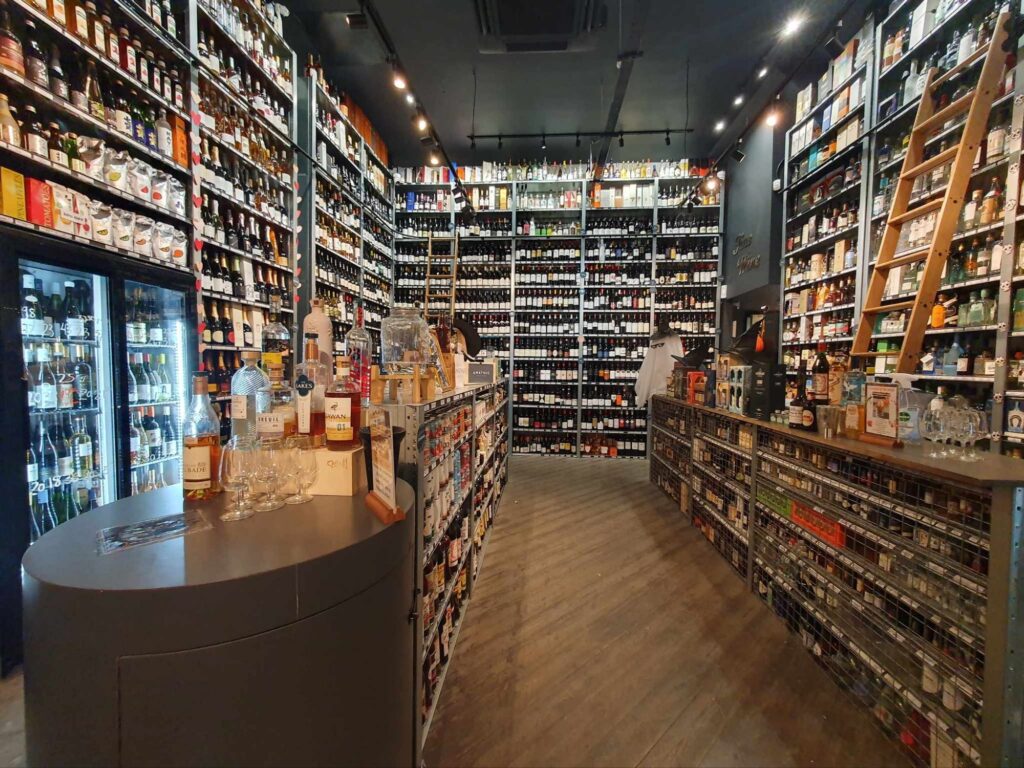
The winery was Carramimbre.
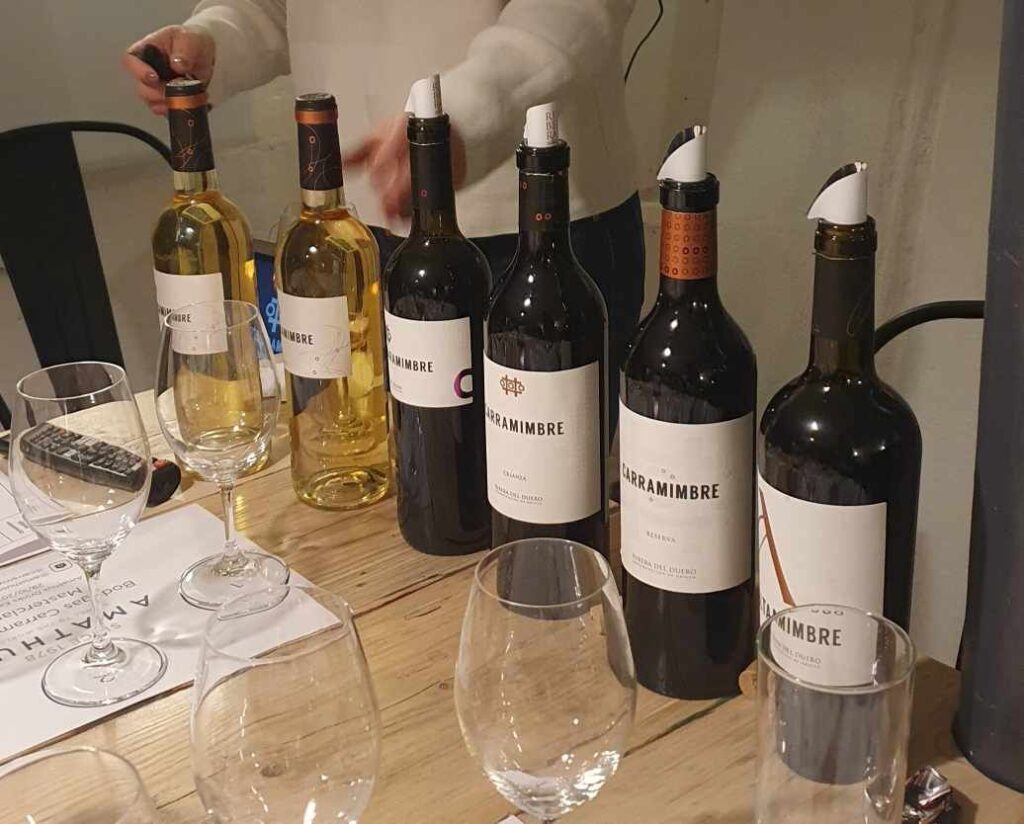
The Verdejo, we tasted both the 2023 and the 2024. The former displayed lime, hay and melon, pretty weighted, slightly oily on the palate. Reminded me of a Pinot Gris. The latter was packed with pear, peach and also melon, refreshing, crisp and tangy. I enjoyed the 2024 better. This white didn’t strike me as ageworthy. Even one year was too much.
The reds were all 100% Tempranillo. According to the winery’s Export Manager Katharina, there used to be a small proportion of Cabernet Sauvignon in their reds, but they’d uprooted this variety altogether for its late ripening feature stretching the whole harvest season way too much. I sensed attention to efficiency here.
All their four reds are oaked, with the Roble being three months in American oak, the Crianza 12 months in French and American oak (80% new, 20% second use), the Reserva 24 months in French and American oak (also 80% new, 20% second use), and the Altamimbre 28 months in older French and American oak.
Heavily oaked is a Spanish tradition in making reds. In a wine world now leaning towards less oak use to fully unlock the inherent character of grape varieties, this approach can be risky. Yet the diehard oaky red lovers will fiercely stand by it without a doubt.
I for one am not too fond of oaky reds. By that I don’t mean no oak at all, but oak has to go hand in hand with fruit, not eclipsing it. Restrained use is key.
In those four reds, oak was so dominant that I really struggled to perceive the fruit. However, in the Roble, at first sniff, I did sense some fresh black cherry and black plum, but they were soon taken over by the oaky character and obvious vinousness. In wine tasting nowadays, one of the quality indicators is fruit definition. The overpowering oakiness sort of blurred the clarity of each fruit’s character, giving me a hard time identifying in the Crianza, in the Reserva or in the Altamimbre exactly what fruits I have nosed or tasted. In the context of contemporary wine tasting, it is fair to say that this may well bring the quality down a touch. The high abv% (14.5 plus) further distracted the already lacked focus in fruit.
Indeed, these Tempranillo from Ribera del Duero were like an enigma to my contemporarily trained nose and palate. To get to appreciate these wines travelling through time, I need a wine guru that thrived in the 90s to give me guidance. But for someone who adores reds that are heady with powerful smoky, clovey aromas and flavours, I am beyond certain that the reds from Carramimbre will put a smile on their face. And if this happens to be you, you know where to source your next favourite reds for sure.