Last weekend I was in the Langhe.
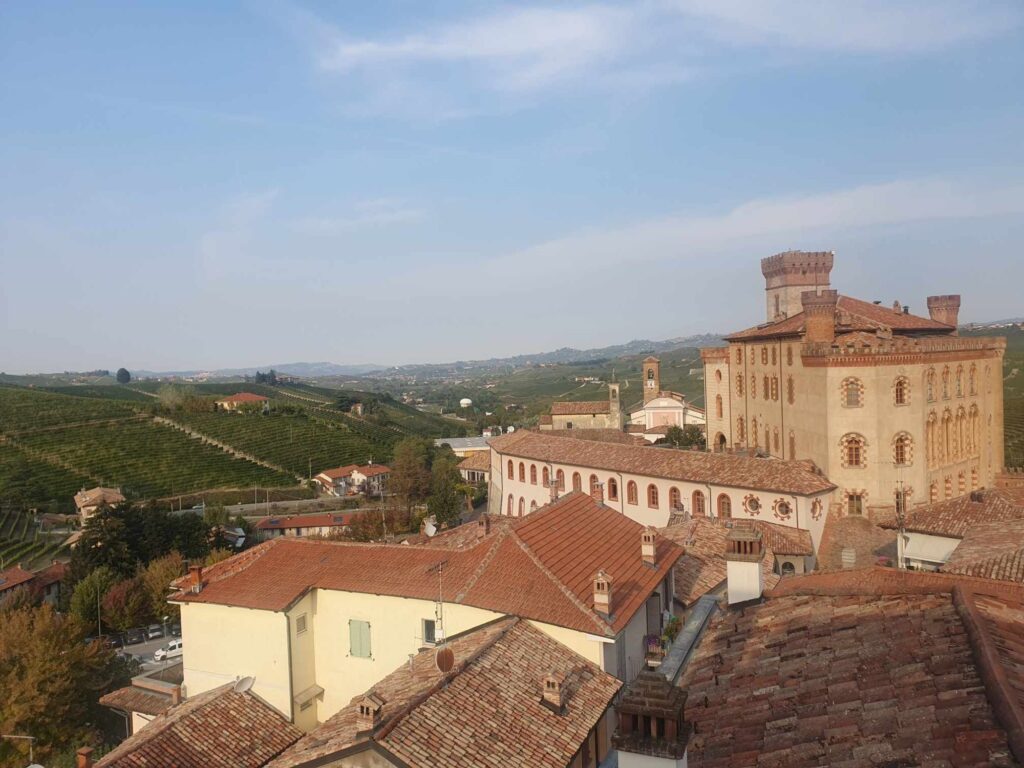
The Langhe
Back in 2022 I did an internship at Fontanafredda. That was my first encounter with the Langhe. The drop-dead gorgeous Langhe is an area in south Piemonte where two of Italy’s most prestigious red wines, Barolo and Barbaresco, are made. Since my stint at Fontanafredda, I’d had a good taste of those delicious Nebbiolo-based red wines. But white truffle, another charm of the Langhe, had yet remained an uncharted territory to me.
Till last weekend.
A friend who’d always adored Piemontese reds moved from the States back to Italy last year. She’d never been to the Langhe and would love to visit.
Hence last weekend.
Flavio Roddolo
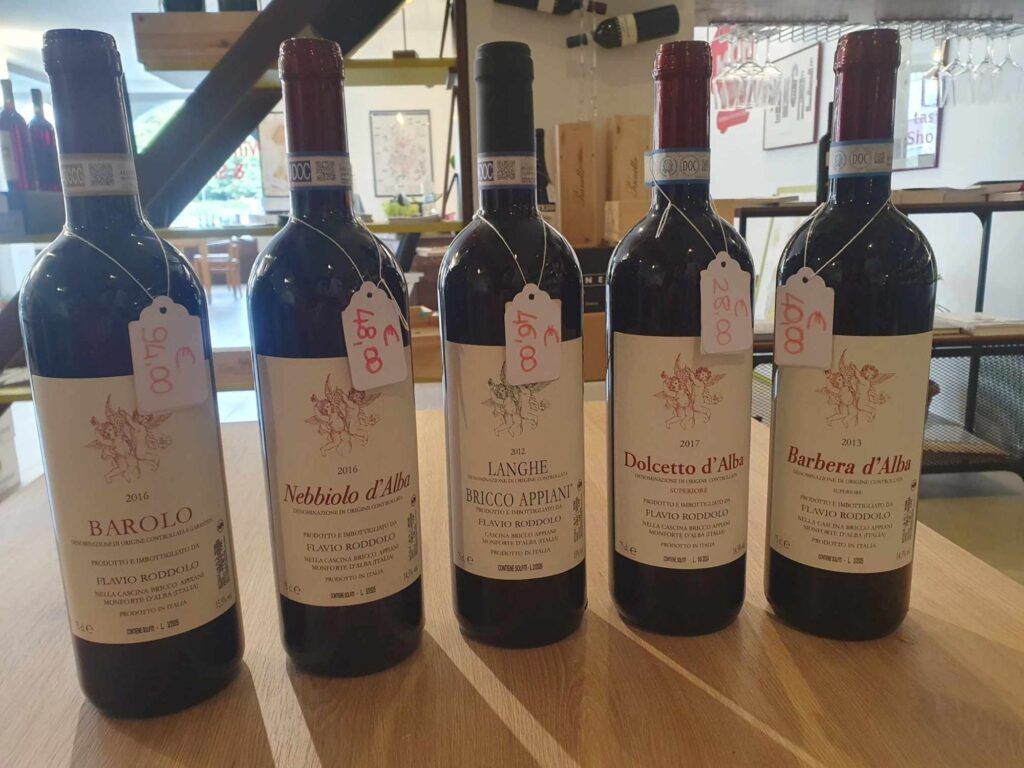
Before meeting her and her husband in Barolo Friday afternoon, my partner and I had secured some “Flavio Roddolo” at Monvino, a wine shop in Monforte d’Alba.
Two days before, at lunch on a bench on Corso Europa under the Milanese scorching sun, another wine-loving friend told me about this eccentric Langhe winemaker crafting buonissimo Barbera whom she’d paid a visit to a couple of years ago.
“When he told us €12 per bottle, you can imagine our glee,” she said.
“What’s the winemaker’s name?”
“I’ll text you when I find out.”
After we parted, I received a message from her: Flavio Roddolo.
“Small production”, “cult”, “exceptional” were what was said about his wines in my research.
Friday afternoon before the Monvino wine shop, we’d actually dropped by the Roddolo estate with the intention to buy a couple of bottles.
“We don’t take cards. Flavio doesn’t like that sort of thing,” the man at the estate, presumably Flavio’s nephew, greeted and said this to us.
He then directed us to Monvino.
At there we bought a 2016 Nebbiolo, a 2016 Barolo and a 2017 Dolcetto.
Il Centro
That night we had dinner at Il Centro in Priocca, a Michelin one-star restaurant that did not display its star anywhere in the establishment.
“It’s my wife’s idea,” said the owner Enrico.
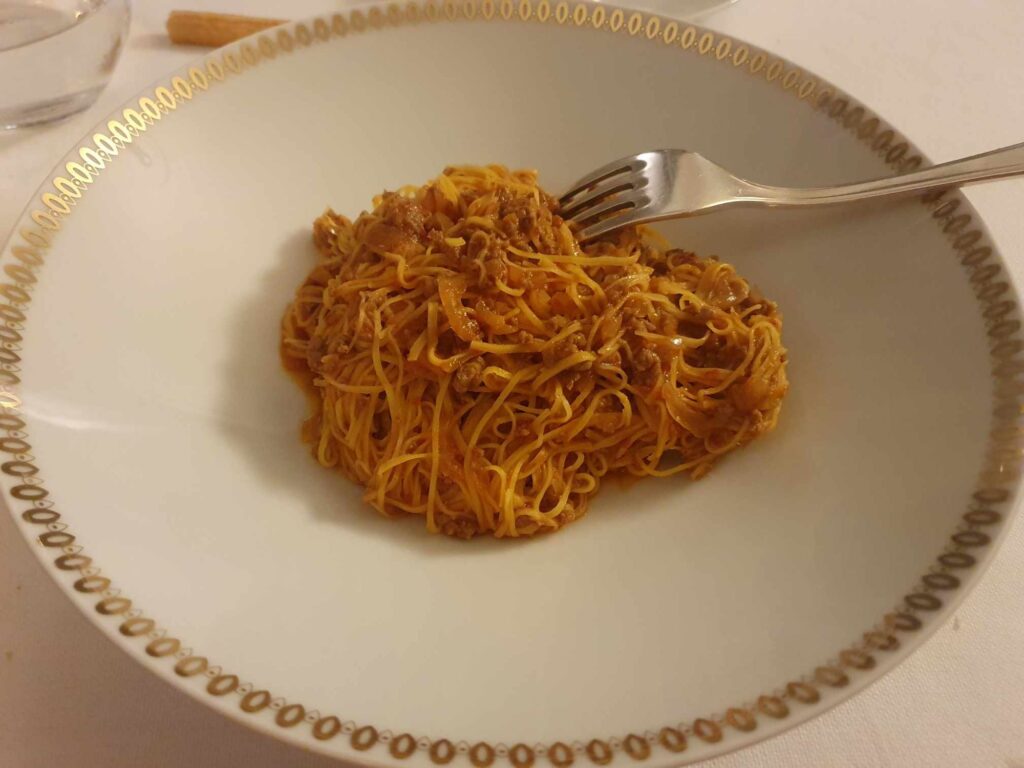
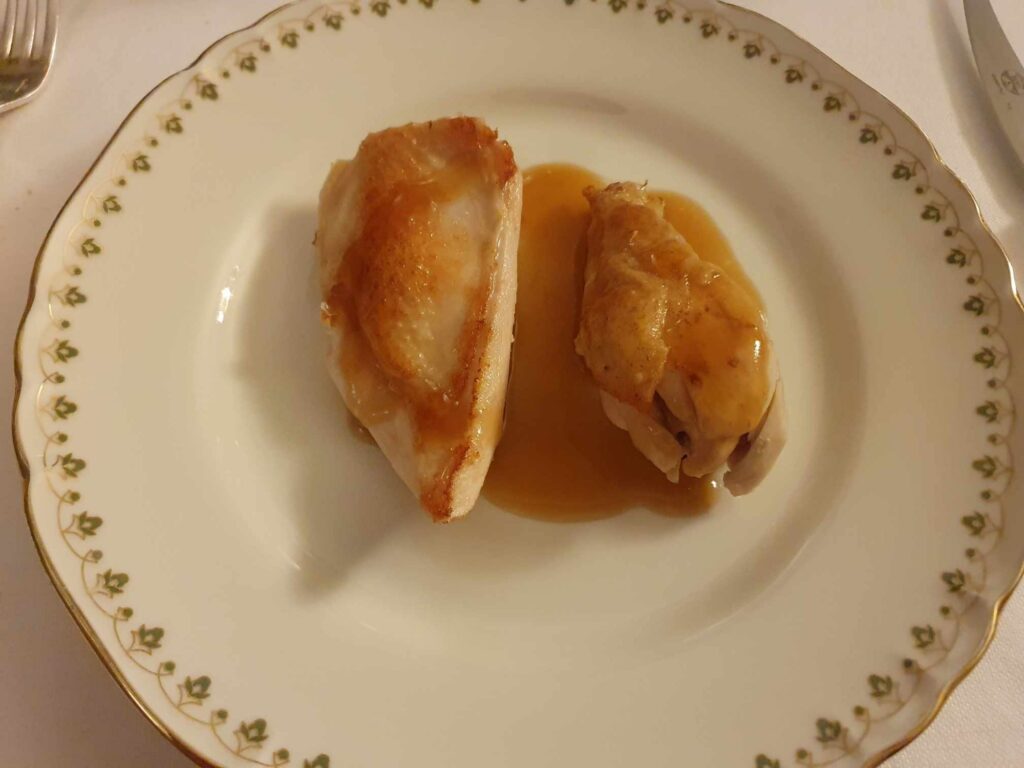
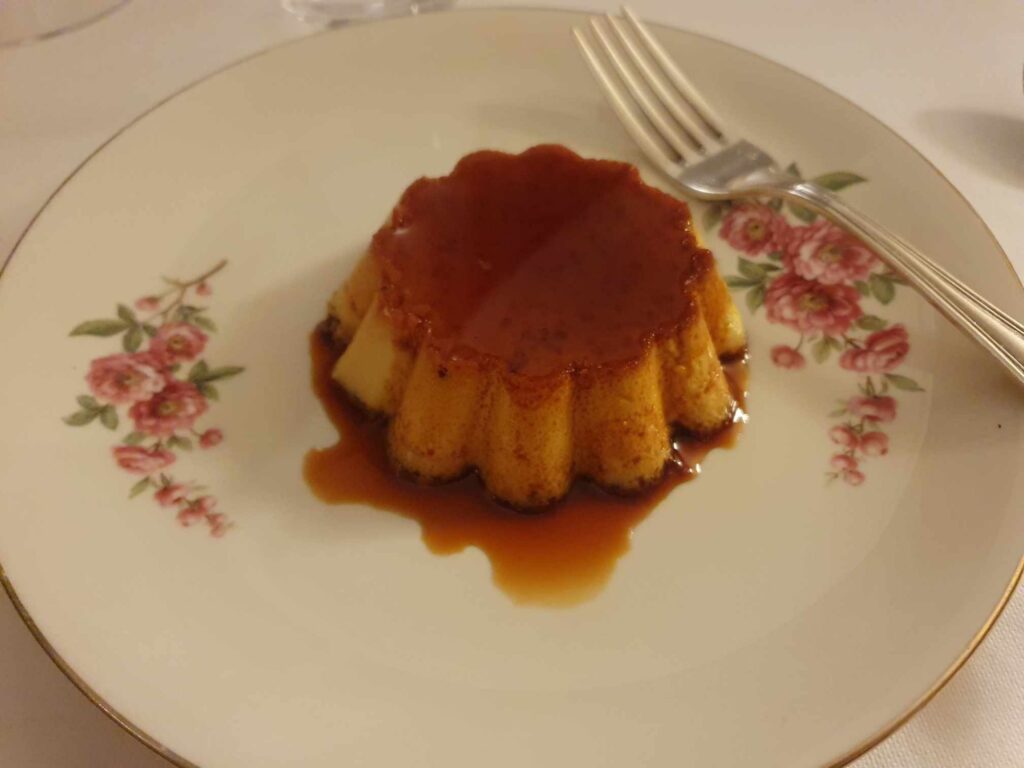
My tajarin, meticulously cut manually thread by thread, was exquisite. The gallina dish was tender and full of flavours. Creme caramel was firmer than usual, yet it was the most delicious I’d ever tasted in my life.
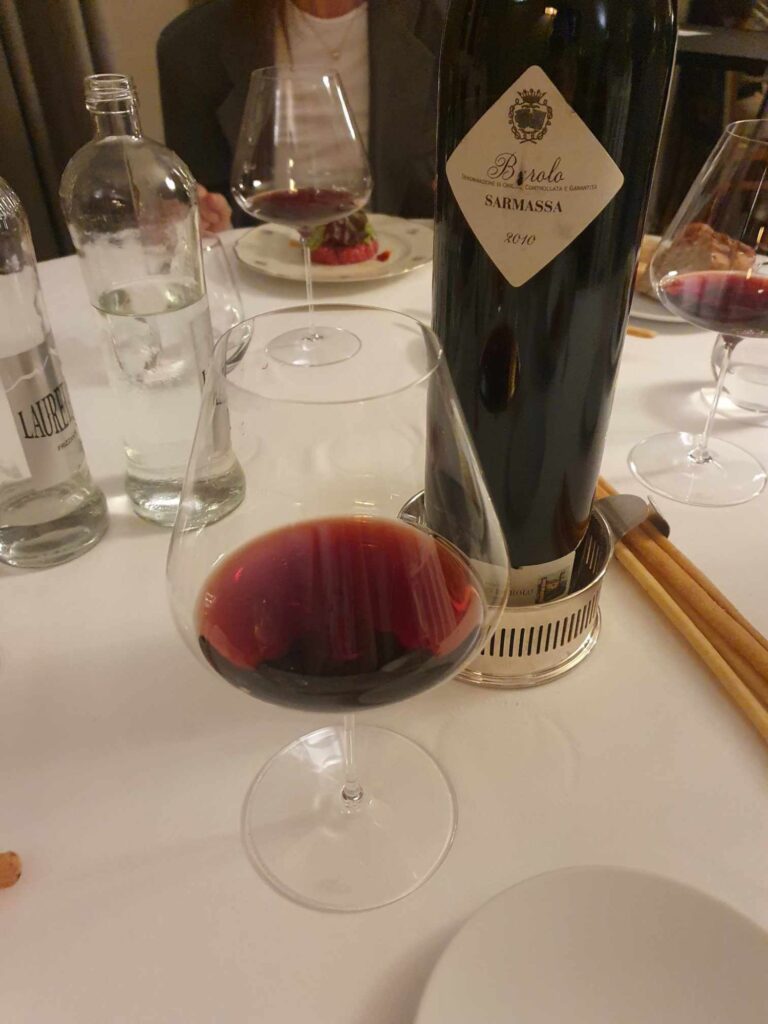
The 2010 Barolo “Sarmassa” by Marchesi di Barolo was smooth on the palate, floral and tarry on the nose. The bouquet of a well-aged Barolo tends to hit you like a forest, as if you’re walking right into it. And once you’re in, there’s no exit. You are hooked forever. “Well-aged” is key though. Most of the time when someone is “unhooked” by a Barolo, it’s simply because the wine is drunk too young.
My partner had been to Il Centro 20 years ago. He was given a book back then and Friday night before we left, Enrico gifted us a new one. This time, more compact but much thicker.
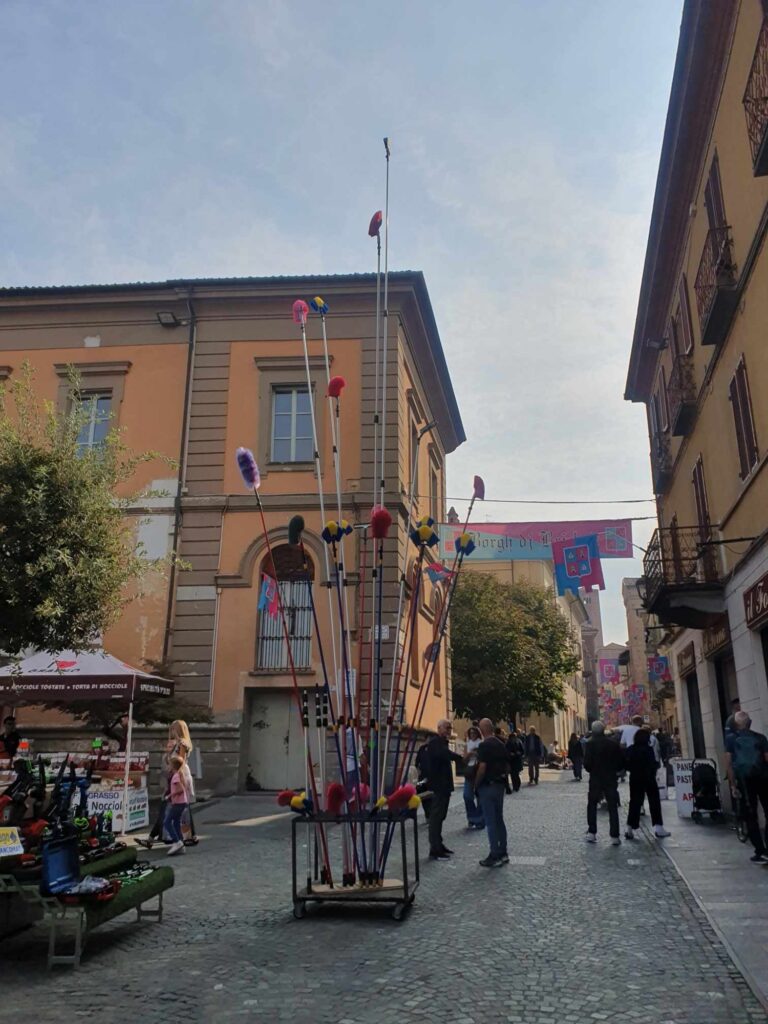
Saturday morning we headed to the city of Alba for white truffle foraging. It wasn’t the auction season yet. But the city was already bustling.
Borgogno
After a quick lunch in Alba, we arrived at Borgogno, a historical winery in the centre of Barolo.
I’d been to Borgogno once. La Festa della Vendemmia is Fontanafredda’s biggest annual event. During my internship there, I was helping out on La Festa in 2022. After the success of La Festa, the whole team celebrated one evening at Borgogno. Both Borgogno and Fontanafredda have been owned by the Farinetti Family since 2008.
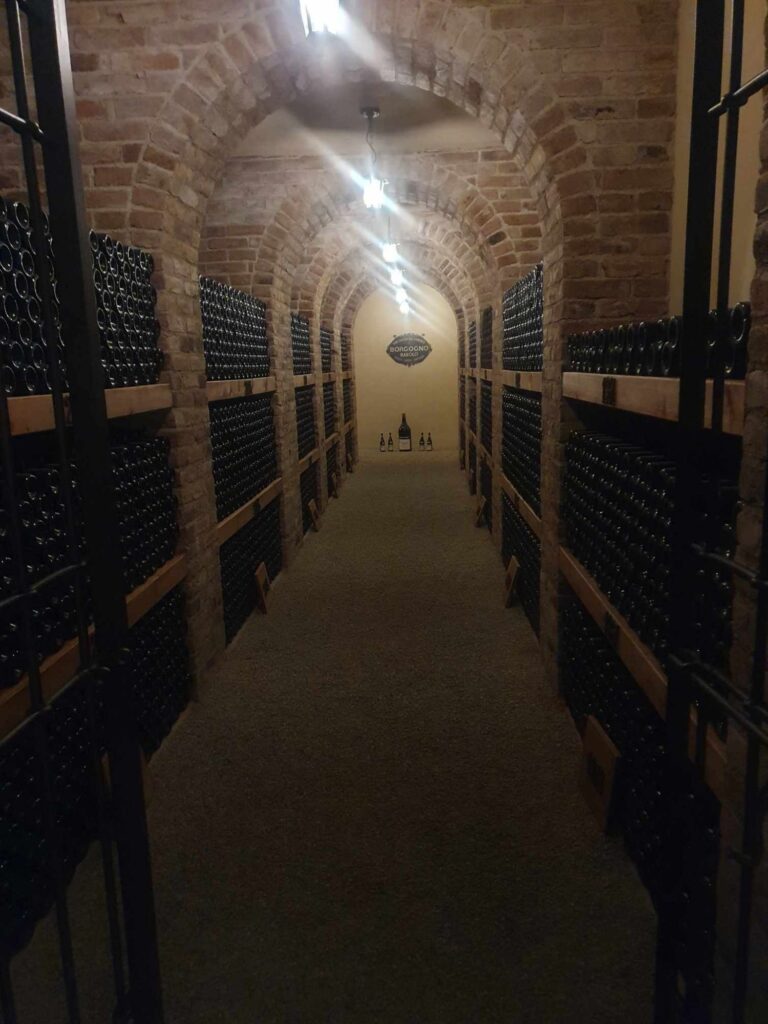
After a tour to the cellar, we tasted Borgogno’s three cru Barolos: Fossati, Cannubi and Liste. All three were 2021.
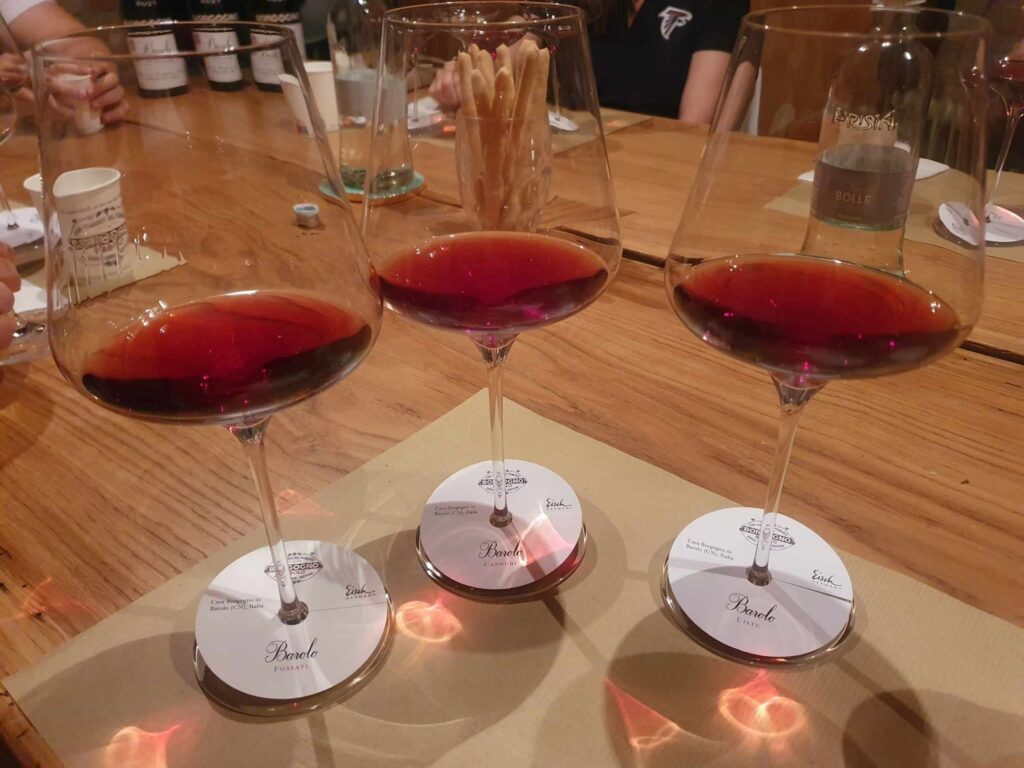
Fossati was very approachable, ready to drink even now. Cannubi was the most expressive and generous on the nose, while Liste the most reserved. One could tell Liste should be kept for another decade or two. It would also need some years for the palate of Cannubi to catch up with its opulent bouquet. Tasting cru wines from the same variety and vintage side by side is always fun and great learning. It is when terrior evolves from a punchline into a layer of aroma, flavour and reality.
Blind Tasting
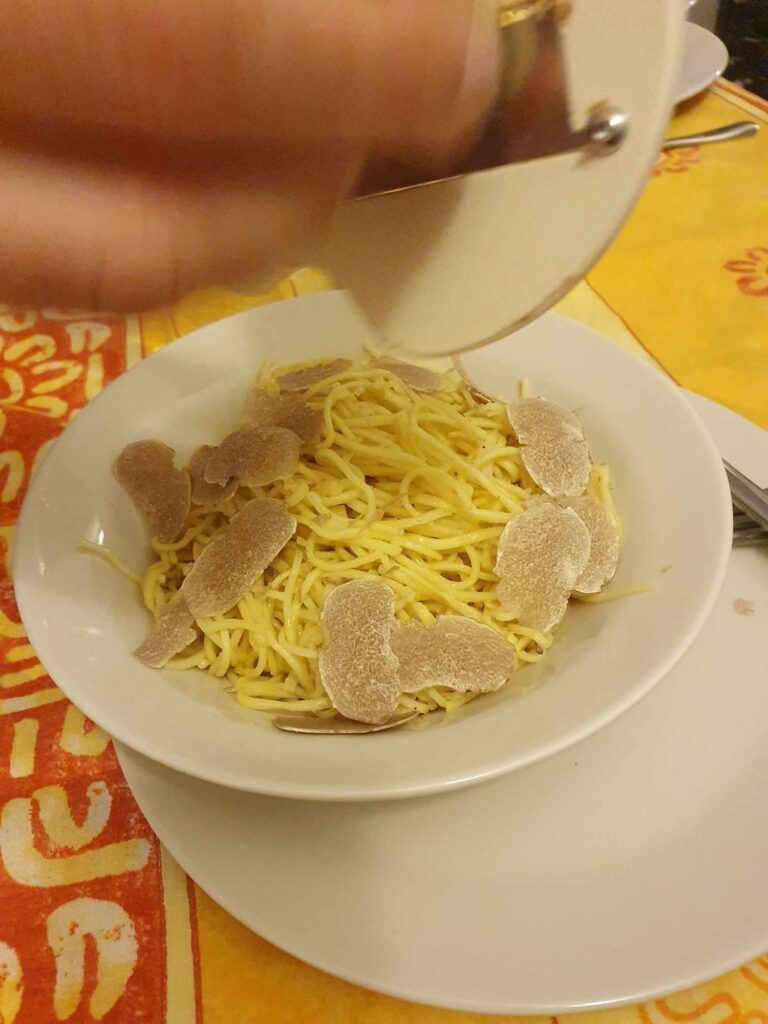
Saturday evening, along with our tajarin on top of which white truffle from Alba was being generously shaved, we opened Flavio Roddolo’s 2016 Barolo and 2017 Dolcetto.
After explaining the typical flavour profiles of Barolo and Dolcetto, we had our friends blind taste the two wines and guess which was which. They nailed it.
Although not as complex as the Barolo, the Dolcetto by Flavio Roddolo was as complex as a Dolcetto could ever be: plum and chocolate, both dark and persistent yet with an uplifting quality contributed by its bright acidity.
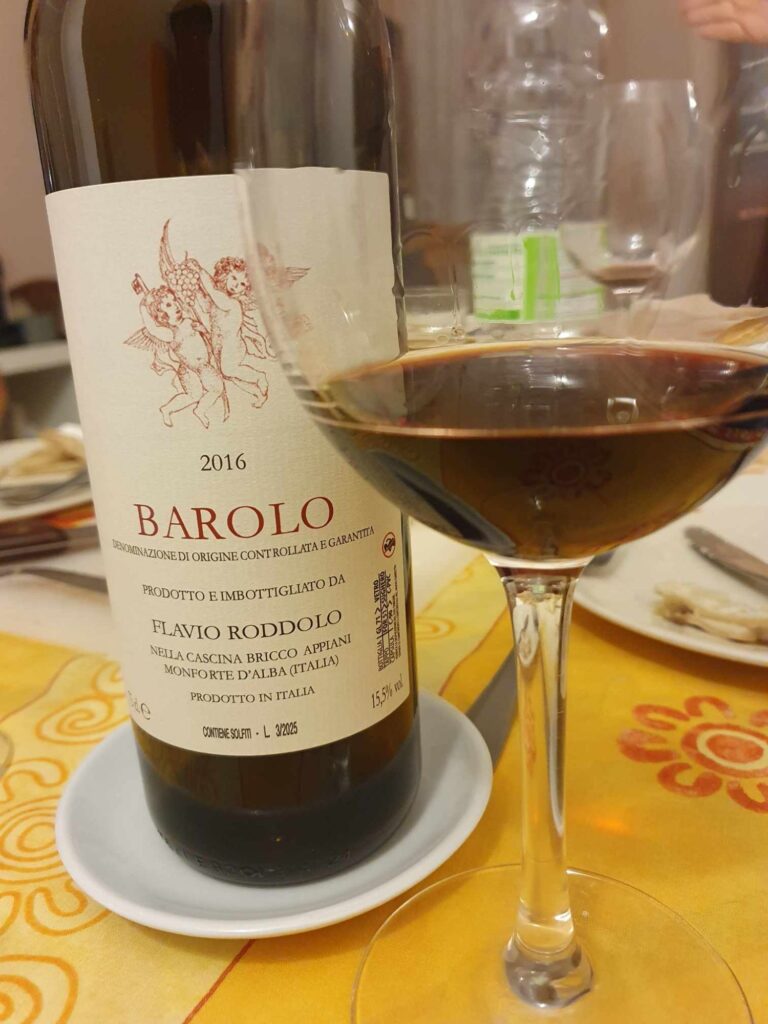
The Barolo was perfumed with cedarwood, sporting an unchained character reminiscent of that of Flavio Roddolo. Well-integrated tannins. Lovely juiciness. It was a Barolo that kept inviting you to the next sip. A perfect embodiment of the Piemontese hospitality.
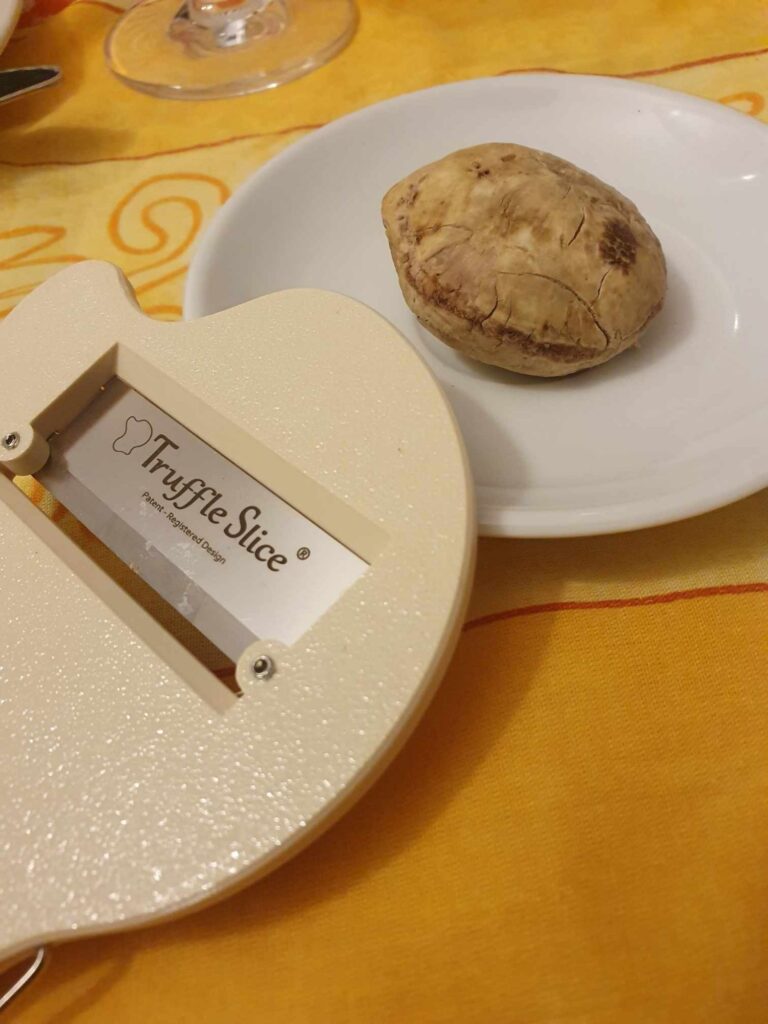
White truffle-wise, the scent was a bit muffled, but still delicately perceptible.
What was also delicately perceptible was our return to the Langhe, which would never be too far away on the horizon.